
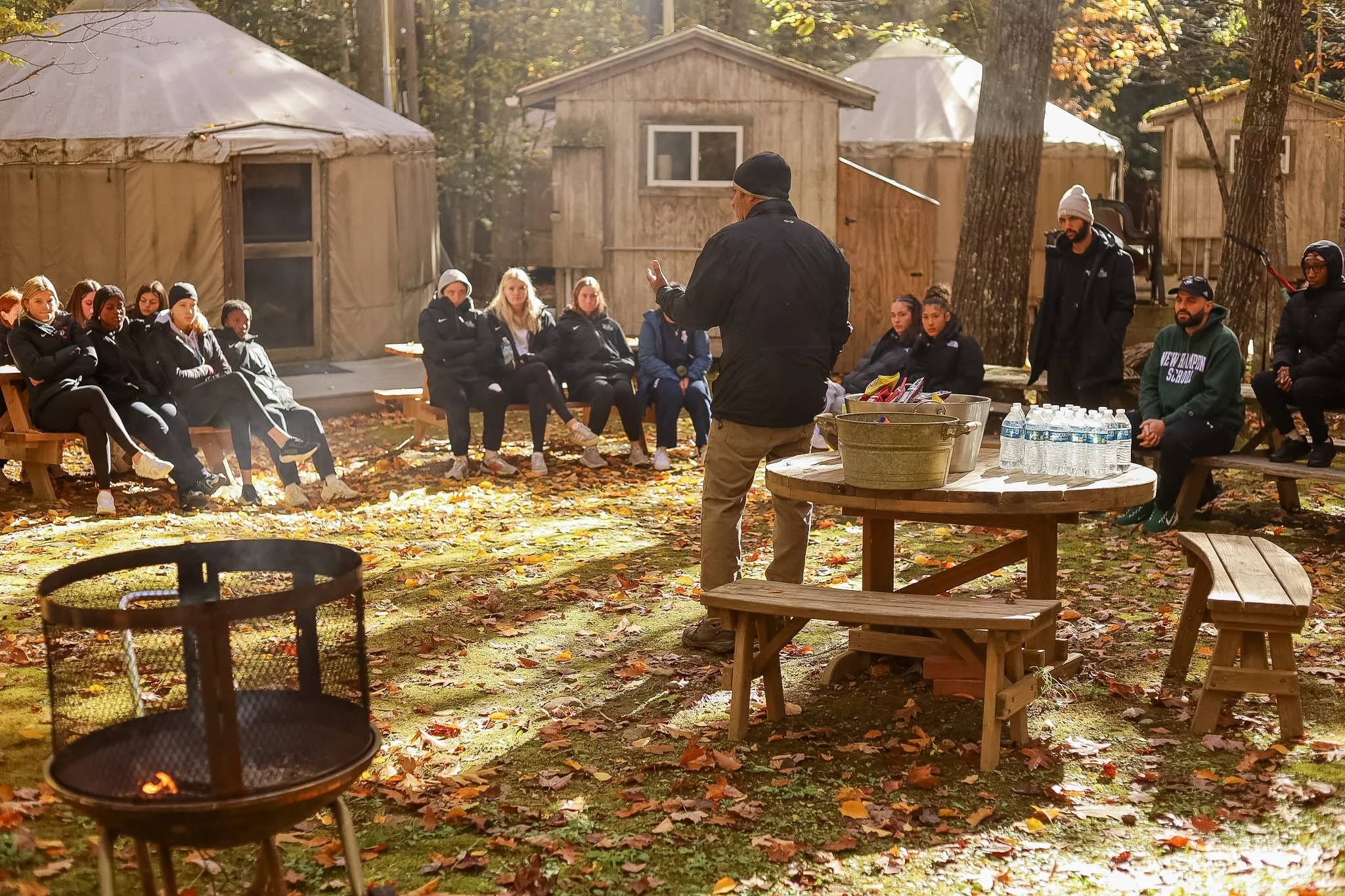
Most coaches and team leaders know the moment. The game is close, the energy is tight, and your instinct says to push harder. Louder instructions, higher expectations, more intensity. But pressure rarely creates the outcome that was intended.
At Driftwood Ranch in Northfield, New Hampshire, we work with sports teams and leadership groups on the opposite approach: leading under pressure by using less of it. Here is what we have learned, and what any coach, teacher, or team captain can try this week.
The pressure you put on yourself spills onto everyone else
High expectations are not the problem. Many of the best leaders hold them. The trouble starts when expectations turn into a constant, silent demand, first on ourselves and then on the people around us.
A coach who expects perfection from themselves often expects it from their athletes. A captain who feels responsible for every result can end up micromanaging teammates. A teacher who carries the weight of every outcome can pass that weight to students.
The first step is simply noticing it. Before you ask more of your team, ask what you are already asking of yourself.
What horses show us about leadership
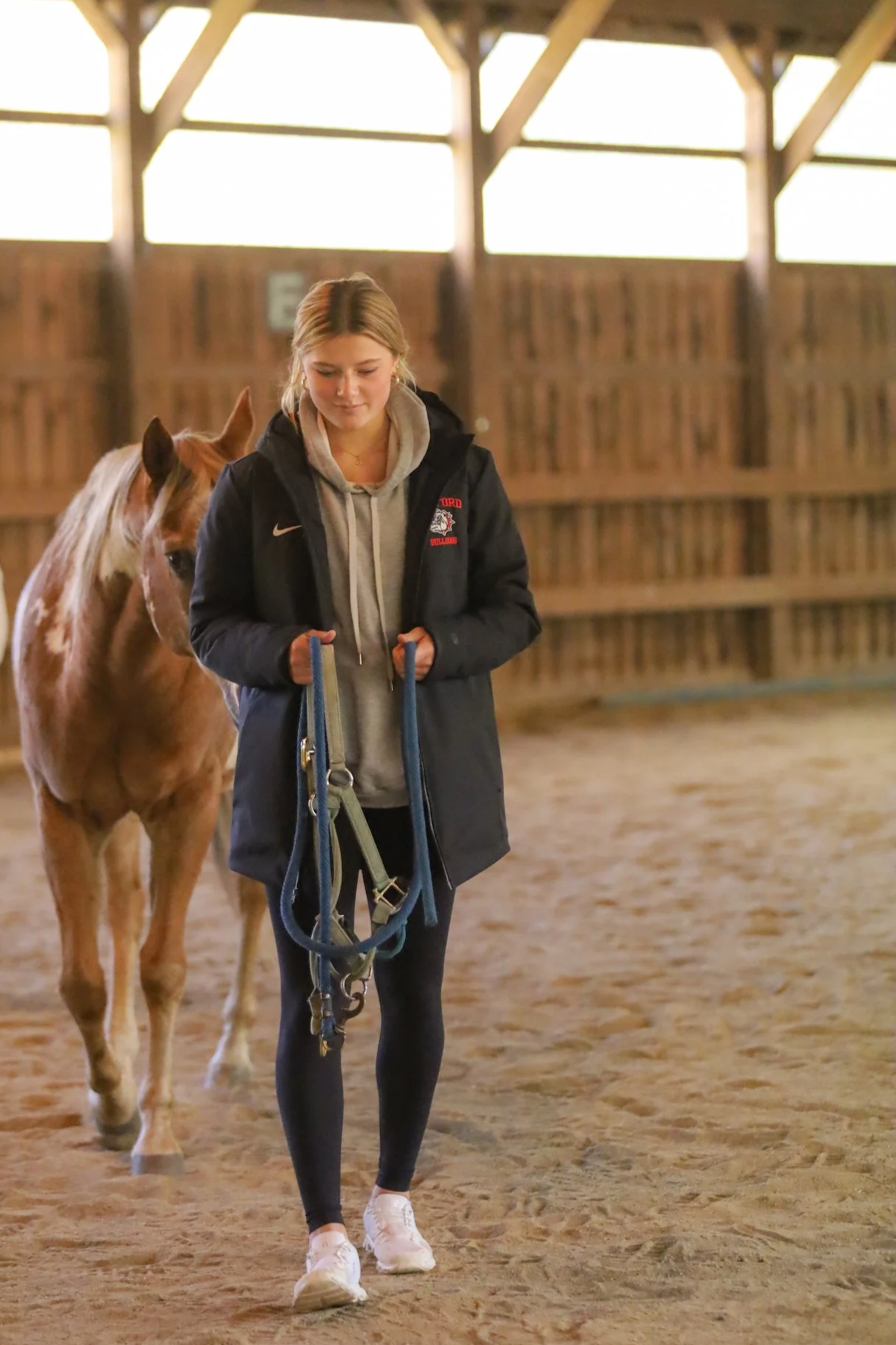
Mirror of Yourself Workshop
We use horses in our workshops because they respond to something people can rarely hide: how we actually show up. A horse does not care about your title, your record, or how loudly you speak. It responds to clear, calm intention.
When a student walks into our round pen carrying too much tension, the horse notices right away. When that same student slows down, decides what they want, and asks for it clearly, the horse responds. There is no lecture and no judgment, just honest feedback.
That moment is a lesson most athletes remember. As one visiting school leader put it, the round-pen exercise gave students a new perspective on leadership and led them to consider their role in the lives of their peers.
What does the horse teach us?
Ask for what you want, clearly. Vague expectations create anxiety. Instead of “play better,” try “I want us to talk on every pass.” Clear requests are easier to meet than high pressure.
Invite before you push. Ask a question first. “What do you need from me right now?” opens a conversation. A command shuts it.
Lower the volume, not the standard. Calm does not mean easy. You can hold a high standard in a steady voice, and people tend to hear it better.
Make it safe to be honest. Athletes tell the truth when they are not afraid of the response. If someone shares a mistake or a worry, thank them for it before you fix anything.
Why emotional safety comes first
Teams perform better when people can speak up, admit mistakes, and ask for help. That only happens in a space that feels free of judgment. Everything we do at Driftwood starts there. People take part at their own comfort level, which is what makes real conversation possible.
Bringing your team to the ranch

“It can be hard to find experiences that are both meaningful and cool for high school kids, and this retreat was both. We will definitely be returning with more students.”
— Ky Feldman, The New Hampton School
Sometimes the easiest way to change how a team works together is to step outside the place where the pressure lives. Our day workshops and weekend retreats take teams out of the gym and onto our 140-acre ranch. The groups are small and intimate, no horse experience is needed, and students are supervised around the horses at all times.
After a recent day with two varsity teams, one of their leaders told us that finding experiences that are both meaningful and “cool” for high school students is hard, and that this one was both.
If you would like to see how it works for your team, learn more about our team leadership development programs for sports teams or contact us to plan a day workshop or weekend retreat. Our season runs from May through October, so it is a good fit for preseason and offseason team building..