
Community Core: Shop Our Social Emotional Learning Tools
Community Core offers two ways to purchase downloadable lesson plans from our Library of Tools. Each Tool comes with a minimum of one of each of the following types of lesson plans:
Council Lesson Plans:
Perfect for student Advisory groups and “circles”. Many of the Council plans have a simple prep worksheet that students can use to prepare first before discussing the topic. These serve well as introductions to the Tool.
Tools-In-Action Lesson Plans:
Activities and games that create fun and engaging experiential learning opportunities using the Tool. Debrief prompts for each activity help students to internalize the Tools they’ve used during the experience.
Reflective Classroom Lesson Plans:
Useful in classrooms with larger numbers of students or when there’s a desire for more academic connection. Grounded in the Humanities, these plans ask students to use reading, writing, and critical thinking skills as they connect the Tools to their own lives and the lives of others.
Complete Sets
Or, you can build your own toolbox!
When you purchase Module 4 (Leadership), you receive 11 Tools, which each come with 3 Lesson Plans (for a total of 33 Lesson Plans with Module 1), along with 5 hours of implementation consultation by a Join the Community, LLC professional.

When you purchase Module 3 (Self Awareness), you receive 11 Tools, which each come with 3 Lesson Plans (for a total of 33 Lesson Plans with Module 1), along with 5 hours of implementation consultation by a Join the Community, LLC professional.
When you purchase Module 4 (Leadership), you receive 11 Tools, which each come with 3 Lesson Plans (for a total of 33 Lesson Plans with Module 1), along with 5 hours of implementation consultation by a Join the Community, LLC professional.
Build Your Own
Pick and choose your tools!
Building Community Tools

It is important to teach our students to recognize that each person has a right to their emotions. As community members, it is not our job to change someones feelings but to listen without judgment and do what we can to create positive feelings whenever possible.
How do you bring this up in your classroom? Tell a seed story about a time when your FEELING (name it) was valued or respected by a person or a group. Share how you felt knowing your feelings mattered to others. Use your seed story to talk about the importance of valuing all feelings in a community/your classroom.
How does valuing others’ feelings/emotions build up a community?
How does not valuing feelings of others break down community?
What can you do to let others know that you care about and respect their feelings/emotions?
Shorthand: You have the right to your feelings.
This set includes 3 lesson plans, activities and guidelines to easily implement in your classroom.
Our students need to be able to recognize the multiple qualities, beliefs, oppressions, and privileges that make us who we are. It’s important to allow people to define themselves—as individuals and as members of the communities to which they belong. It’s even more important to accept and celebrate one another’s shared and unique identities.
How do you bring this into a classroom? Show and Tell: Ask your students share a story of a time when
their identities either enabled or restricted their actions.
What did you realize about your own or other people’s identities from the stories shared?
Why do you think valuing identity in community is important?
What are concrete ways valuing identity could make a positive difference in your community?
What are specific things you could say or do to show that you valued the identities of your community members?
Shorthand: You define you; we accept all.
This set includes 3 lesson plans, activities and guidelines to easily implement in your classroom.

We need to be able to seek first to understand, not to be understood. It’s so important to ask nonjudgmental questions and listen actively to learn about people’s experiences, values, and beliefs.
Ask your students to really think about the art of Listening to Learn by asking them a few questions:
Who in your life asks you many sincere questions about yourself?
How do you feel about this person? How does this person make you feel about yourself?
Have you ever been asked a question, but then felt that the person didn’t care about your answer?
What made you feel this way?
Why is a community stronger if people feel they are really being heard?
Shorthand: Speaking is silver; listening is gold.
This set includes 3 lesson plans, activities and guidelines to easily implement in your classroom.
It’s an art to use conversation to plan, share, and solve problems. We need to teach our students how to properly use guidelines and structures to facilitate discussions that are productive and uphold emotional safety.
How? Have a mini debate. Students will practice Engaging in Open Discussions with low-stakes, humorous content. Give them examples of possible responses/guidelines.
“I hear you… and I also think…”
“Great point.”
“Well, what about…?”
“Have you considered…?”
“I believe…and others may think...”
Shorthand: Talk it out.
This set includes 3 lesson plans, activities and guidelines to easily implement in your classroom.

This set includes 3 lesson plans, activities and guidelines to easily implement in your classroom.
Recognize that the strongest community conversations include a balance of all voices. Notice how much you are speaking in group discussions. Make an effort to share when your voice is not heard. Create space for others to share for themselves so their voices are not lost.
Shorthand: Share the air.

This set includes 3 lesson plans, activities and guidelines to easily implement in your classroom.
Openly and purposefully support the positive efforts of other members in the group. To support others might mean, for example, helping a member build on strengths, realize a vision, take a risk, or overcome obstacles.
Shorthand: Lean on me.

This set includes 3 lesson plans, activities and guidelines to easily implement in your classroom.
In order to move the community forward, recognize and speak openly about the best and the potential best inside all community members and situations. Don’t dwell on the faults, problems, and failures.
Shorthand: Positive Attitude Changes Everything / The glass is half full.

This set includes 3 lesson plans, activities and guidelines to easily implement in your classroom.
Identify when the community has lost track of its mission, values, and goals. Be willing to stop a task and ask for reflection and renewed commitment in order to move forward positively.
Shorthand: “Houston, we have a problem.”

This set includes 3 lesson plans, activities and guidelines to easily implement in your classroom.
In challenging situations, be solution-oriented rather than problem-focused. Seek ways to solve a problem once it is identified.
Shorthand: How can we fix it?

This set includes 3 lesson plans, activities and guidelines to easily implement in your classroom.
Stay focused on a goal or task. Persist through completion without giving up on yourself or your team. Recommit to the community and the goal until it is achieved.
Shorthand: Stick to it!
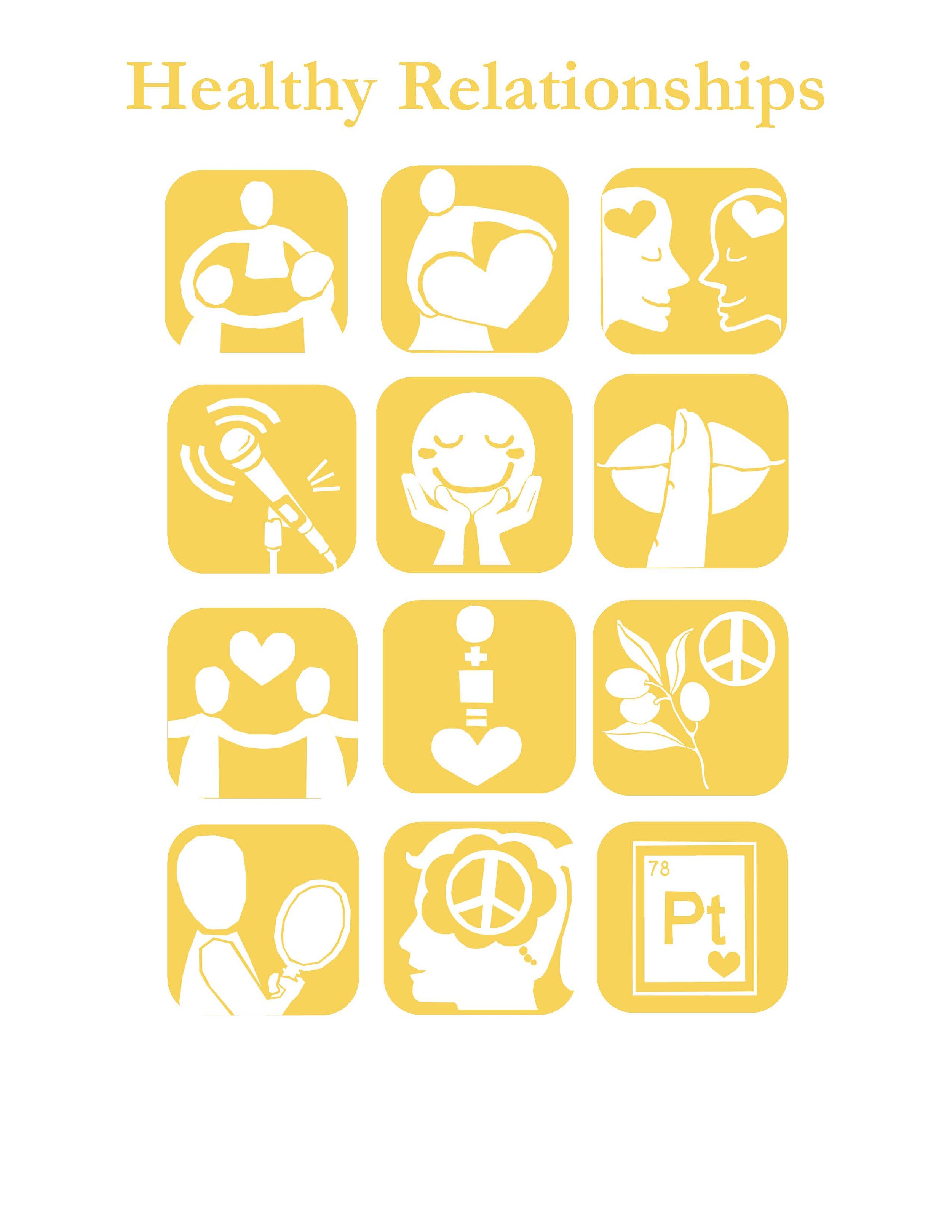
Healthy Relationships
We need to take every opportunity to consciously include all members of a group. Our students and colleagues need to know hoe to make an ongoing, intentional effort to invite others to join activities. It is so important to recognize that even the appearance of a clique or exclusive friendship can feel hurtful to members of the community.
Talk to your students about the definition of Being Inclusive. then ask them:
Which of these situations is most likely to have EXCLUSIVITY at our school (where some students are left out by peers)?
Hallway
Lunchroom
In a Class
Do you think it’s possible for really good friends to put out a vibe of EXCLUSIVITY without meaning to?Shorthand: Come and sit with us.
This set includes 3 lesson plans, activities and guidelines to easily implement in your classroom.

It is important to act with warmth and care towards yourself and others. It can sometimes be easier with close friends and family. However, its just as important when it comes to acquaintances and strangers. We love doing Random Acts of Kindness, a little kindness goes a long way!
Here are a few questions that can really get you classroom thinking about kindness.
What happens to our community when we are only kind to peers that we “like,” and we forget/ignore/treat unkindly those we “like” less?
Is it possible to be kind to someone who is not a “close friend”?
Should being kind to someone depend on your relationship with the person?
Shorthand: I care.
This set includes 3 lesson plans, activities and guidelines to easily implement in your classroom.
It is important to try to understand the feelings, needs, and perspectives of others. We teach kids what Empathy means, but do we teach them to be empathetic? Practicing empathy is worthing we all need to work on, regardless of relationship and whether or not you “like” a person.
Are you Empathetic?
I often think of others feelings.
I don’t make fun of people because I imagine what it would feel like if I was in their shoes.
I listen to others and what the are going through.
I try to understand others point of view.
Shorthand: Walk in another’s shoes
This set includes 3 lesson plans, activities and guidelines to easily implement in your classroom.

Recognize that your words, body language, and actions can either build us up or tear us down. Choose to create spaces where all can comfortably share and take risks without hurt or judgment. Be especially aware of how jokes and sarcasm can hurt.
How can you start a discussion in class about the importance of Upholding Emotional Safety? Everyone loves a good joke, but how we tell it and tow home we share jokes with is important…
“Today we’re going to discuss how jokes and teasing can hurt even if it is not intentional. (Define INTENTIONAL—on purpose; meaning to. Define IMPACT— the result; the outcome.)
There is often a burden put on the person “taking” the joke to figure out the intent. If the intent is not crystal clear and positive, then it can quickly lead to feelings of insecurity and can break down relationships and community.
Shorthand: This is a judgment-free zone.
This set includes 3 lesson plans, activities and guidelines to easily implement in your classroom.

It’s imperative that we teach our students to recognize the need and importance to practice safe confidentiality when peers share personal information with them in private conversations. Students and teachers need to be conscious of the appropriate time and place to have private conversations in order to value all feelings.
Remember not to let your private conversations turn into gossip. Words can’t be taken back.
Remind your students of the game telephone: One person puts a sentence on the paper and then whispers it to the person next to them. The group tries to keep the message the same as it is whispered around the circle, person to person. The last person says the message out loud.
Shorthand: Use a filter.
This set includes 3 lesson plans, activities and guidelines to easily implement in your classroom.

This set includes 3 lesson plans, activities and guidelines to easily implement in your classroom.
Build relationships with people who grow your self-esteem, reflect your values, and push you toward your best self. Pick people you can trust who accept you without judgment. Let go of people who disrespect you in some way.
Shorthand: Pick people who pick you up.

It’s important to recognize that although it can be tempting to only form close relationships with those most similar to us, there are great benefits to seeking out and building relationships with people who have different experiences, interests, and identities.
Whats a different approach you can take when looking at relationships? You can have your students think of two of your closest friends or family members. Ask them to:
List 5 things they have in common.
List 5 things that are different between the two of them
Ask students to look only at the Differences column for both their friendships. Then pair up students to make a list of all the possible differences and brainstorm benefits to having a friend with these differences.
Shorthand: What makes us different makes US stronger.
This set includes 3 lesson plans, activities and guidelines to easily implement in your classroom.

It is not only important to recognize that challenges and conflict exist between all people, but to teach our students to be aware of these challenges and conflicts. Show them how to consciously practice respectful approaches to address and overcome those challenges. How do you react when your buttons are pushed?
My HOT button was pushed when Marius bumped me in the hallway…
I perceive he feels that I don’t matter.
Do I believe that I don’t matter? NO. I know I do matter.
I do not have to react to this situation. I can ACT when I cool off by having a conversation with Marius that lets him know how I feel frustrated and overlooked when he bumps me. I can ask an adult for help if I need it.
Shorthand: We can't always agree, but we can always choose respect.
This set includes 3 lesson plans, activities and guidelines to easily implement in your classroom.

This set includes 3 lesson plans, activities and guidelines to easily implement in your classroom.
Consciously reflect on experiences, actions, emotions, and warm/cool feedback in order to grow. Be willing to recognize one’s own strengths, challenges, and areas for growth.
Shorthand: The mirror tool
This set includes 3 lesson plans, activities and guidelines to easily implement in your classroom.
Choose to believe that people have good intentions; they want to be kind and fair. Avoid falling into fear and judgment traps without considering another’s perspective.
Shorthand: Assume best intentions.

This set includes 3 lesson plans, activities and guidelines to easily implement in your classroom.
Do unto others what is good for them. Listen carefully and honor what people tell you when they want or need instead of assuming that we all want the same things.
Shorthand: Treat people the way they want to be treated.
Self-Awareness

It is so important teach our students to recognize that everyone makes mistakes and that our mistakes do not define us. We need to celebrate them as opportunities to learn and improve, forgive ourselves for past mistakes to clear a path to self-love and growth.
Question is how?
Initiate a conversation with your students.”Today we are going to talk about mistakes. Everybody makes them—from leaving your homework at home to sending a text to the wrong person!”
Have your students take 60 seconds to think of a mistake that they have made recently. Ask them:
What are common responses to mistakes?
What do you say in your head or aloud when you make one?
Or what do you hear people say?
How do those types of responses make us feel?
Our gut reactions to tiny (or big) mistakes is often very negative and gets us more frustrated and down on ourselves than is necessary. We might think, “I’m so stupid” or “Shoot, now my whole day is ruined.” It’s not ruined, this is a perfect avenue teach your students how Reframe their Mistakes in to a positive experience.
Shorthand: I made a mistake! *applause*
This set includes 3 lesson plans, activities and guidelines to easily implement in your classroom.

Small and large gestures go a long way. We have lost the value of saying “thank you”. By taking the time to appreciate each other, opportunities for growth can unfold. Conscious gratitude is not only good for our general well-being and health. Being grateful is a building block for solid relationships.
Where is a good place to start?
List 5 sources of JOY or HAPPINESS in your life.
List 5 sources of STRESS or UNHAPPINESS in your life.
Which list was easier to write?
OBJECTIVE: Students will be able to practice the tool Be Grateful by writing a “Daily Affirmation,” a poem which values the good or positive elements of their own lives.
Shorthand: Attitude of gratitude!
This set includes 3 lesson plans, activities and guidelines to easily implement in your classroom.

Body positivity: It’s important to accept and love everyone in a world where body shaming is prevalent. What is physical attractiveness? It is the opportunity to not only accept all body types but consciously adjust the way we see each other. Celebrate the differences in the physical features of others while embracing our own body.
Here are some questions you could bring up in your class to address the idea of Being Body Positive.
What are the most common POSITIVE body-related terms that you and your peers use to compliment or talk about others?
What are the most common NEGATIVE body-related terms that you and your peers use?
How might talking negatively about the physical appearance of people in the media (TV, web videos, social media) affect YOUR own self esteem?
How might talking positively about the physical appearance of people in the media affect your own self-esteem?
Shorthand: Ain’t no body the wrong body.
This set includes 3 lesson plans, activities and guidelines to easily implement in your classroom.
It is important to consider what matters most to you. Take a moment to define your personal values, and use them to guide choices.
Activity: Congratulations! You just turned 50 years old and you just won THE BIGGEST award of your lifetime. Take a moment to imagine your future. Then decide: what is the biggest award you could win? What might you accomplish to have won it? You may make up whatever award you like.
How easy or difficult was it to select the values that might guide you to success?
Shorthand: Stay true to you.
This set includes 3 lesson plans, activities and guidelines to easily implement in your classroom.
This set includes 3 lesson plans, activities and guidelines to easily implement in your classroom.
Discover one’s own values, and look up to people who embody those values. Study the people you most admire.
Shorthand: Imitate great values.

This set includes 3 lesson plans, activities and guidelines to easily implement in your classroom.
Recognize the ways in which popular media messages affect our feelings about ourselves. Consciously choose what types of media we consume, how much, and how often.
Shorthand: Don’t let media bring you down. Healthy Media, healthy mind.
This set includes 3 lesson plans, activities and guidelines to easily implement in your classroom.
Recognize that we all have personal challenges that hold us back from feeling secure in ourselves and reaching our hopes and dreams. Work to overcome these challenges through practice and by asking for help
Shorthand: Polish a diamond in the rough.

Identify Personal Strengths:
It is important to recognize and identify our personal strengths. By consciously identifying these strengths we learn what defines us. What makes me different from you? Find opportunities to share and celebrate the different strengths within your community. Be confident in your own personal strengths but more importantly encourage strength in others.
Shorthand: I’m good at that!—AND—You’re good at that!
This set includes 3 lesson plans, activities and guidelines to easily implement in your classroom.

This set includes 3 lesson plans, activities and guidelines to easily implement in your classroom.
Open yourself to other people’s perspectives on your leadership and progress. Listen from the heart.
Shorthand: How am I doing?
This set includes 3 lesson plans, activities and guidelines to easily implement in your classroom.
Recognize that positive and negative feelings are all valid responses to your experiences. Consciously name, accept, and investigate your emotions. Recognize that feelings are temporary and will, eventually, pass.
Shorthand: Feel your feels.
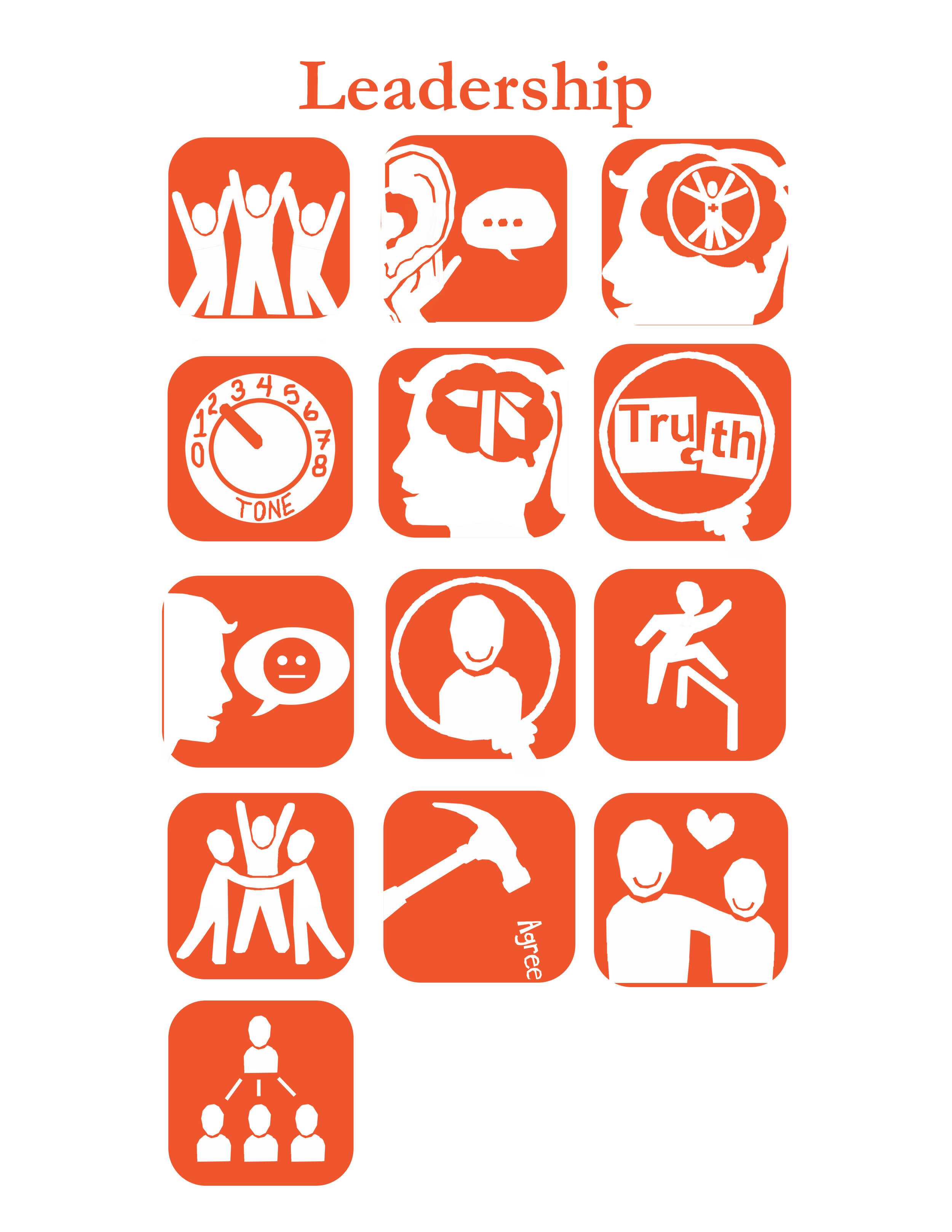
Leadership

Let’s make th time to help others feel powerful and motivated by offering thoughtful, frequent support and inspiration.
Ask your students, Who is someone who genuinely encouraged you and inspired you to improve persevere, or do something wonderful?
Tell a seed story about the person who genuinely encouraged you. Tell your students enough background so that they can understand why you needed the encouragement. Tell what the encouragement meant to you.
Shorthand: You can do it! We can do it!
This set includes 3 lesson plans, activities and guidelines to easily implement in your classroom.

It’s important to listen from the heart. We are given feedback about ourselves by others all the time. This feedback can come in formal ways (report cards from school) or informal ways (likes on an Instagram post). The tool Recieve Feedback Openly refers to more formal feedback regarding leadership and progress.
What are some positive responses to receiving feedback openly?
Thank you for letting me know!
That might be hard for me, but I will try.
Can you help me implement that feedback?
Can you be more specific? I’m having a hard time understanding what you would like me to change.
Shorthand: How am I doing?
This set includes 3 lesson plans, activities and guidelines to easily implement in your classroom.

Not only do we need go be aware that our body language and facial expressions communicate messages and can affect how we and other people feel. We need to teach our students the importance of Body Language!
Why does how we look when we say what we say matter?
Who benefits from assessing and adjusting body language?
What can you do if you realize your own body language has been “off” in a conversation?
What can you do to prepare when you have something difficult to say to a person in the community?
Shorthand: Check and change
This set includes 3 lesson plans, activities and guidelines to easily implement in your classroom.

It is so important that we learn to take a step back and notice the word choice, attitude, and pitch of your spoken and written voice. We may need to adjust so that we are communicating clearly without bringing ourselves or others down.
Why does how we say what we say matter?
Does managing our tone help just you and the other person, or does it help the whole community?
What can you do if you realize your own tone has been “off” in a conversation?
What can you do to prepare when you have something difficult to say to a person in the community?
Shorthand: It’s not only what you say but how you say it!
This set includes 3 lesson plans, activities and guidelines to easily implement in your classroom.

This set includes 3 lesson plans, activities and guidelines to easily implement in your classroom.
Seek a variety of perspectives and ways of thinking. Stretch your brain to consider topics from multiple viewpoints, offer alternative solutions, or make an unpopular choice. Be willing to change your mind.
Shorthand: See it another way!—or—Yes, AND…!

This set includes 3 lesson plans, activities and guidelines to easily implement in your classroom.
Maintain a broad vision of "the truth." Recognize that reality is not always what it seems and requires seeing a topic from multiple perspectives to fully understand it. Research completely and deeply; think critically about your sources; then, communicate honestly about what you have learned.
Shorthand: Peel the onion. Be honest.

This set includes 3 lesson plans, activities and guidelines to easily implement in your classroom.
Listen to your conscience and your heart. Find the courage to speak up and speak out for what’s right, even when you think that others may not receive your message well.
Shorthand: Speak your truth.

This set includes 3 lesson plans, activities and guidelines to easily implement in your classroom.
Seek people you can trust who actively support your growth and development with consistent advice and feedback. A quality mentor has insights to offer and builds a relationship with you because they care.
Shorthand: Look up and reach out.

This set includes 3 lesson plans, activities and guidelines to easily implement in your classroom.
Persist with creativity and available resources to find a way over, around, or through any barrier that blocks your individual or group goals.
Shorthand: Over, Around, or Through.

This set includes 3 lesson plans, activities and guidelines to easily implement in your classroom.
Be a supportive follower of others’ positive leadership. Leaders follow and stand together in solidarity with other leaders to achieve goals and to learn. Being a leader does not have to mean you’re in the front.
Shorthand: Solidarity!
This set includes 3 lesson plans, activities and guidelines to easily implement in your classroom.
Encourage all community members to agree, to accept, and support decisions as often as possible.
Shorthand: Grow unity!—or—Strength in numbers.

This set includes 3 lesson plans, activities and guidelines to easily implement in your classroom.
Build a relationship with and offer consistent advice and feedback to someone who seeks to learn from your positive leadership.
Shorthand: Reach out and pull up.
This set includes 3 lesson plans, activities and guidelines to easily implement in your classroom.
Recognize that to be a good leader you must often include others in a plan or project. Find ways to request support or divide up the work in ways that build on group members’ strengths and get the job done.
Shorthand: Share the load.—or—Many hands make light work.
When you purchase Module 1 (Building Community), you receive 11 Tools, which each come with 3 Lesson Plans (for a total of 33 Lesson Plans with Module 1), along with 5 hours of implementation consultation by a Join the Community, LLC professional.